
When comparing dentures vs implants, the right choice usually comes down to four things: oral health, budget, treatment time, and how important day-to-day stability is to you. Dentures often replace missing teeth faster and at a lower upfront cost, while dental implants usually offer better stability, stronger chewing, and better jawbone preservation.
Neither option is automatically best for everyone. A dentist should evaluate your gums, remaining teeth, bone levels, bite, and health history before recommending the safest and most practical plan.
If you're weighing removable tooth replacement and want a practical, non-surgical solution for replacing several missing teeth, dentures can restore chewing, speech, and appearance while minimizing immediate cost and treatment time. Carolina Complete provides custom denture care at University City, Charlotte, NC, helping patients get comfortable, natural-looking results and clear next steps for follow-up and maintenance.
Dentures are removable appliances that replace several teeth or a full arch. Dental implants are small posts, usually titanium, placed in the jawbone to support a crown, bridge, or implant-retained denture.
|
Factor |
Dentures |
Dental Implants |
|---|---|---|
|
Stability |
Rest on the gums and may move |
Anchored in the jawbone |
|
Surgery |
Usually not required |
Required for placement |
|
Treatment time |
Often weeks to a few months |
Commonly several months |
|
Initial cost |
Generally lower |
Generally higher |
|
Cleaning |
Removed for daily cleaning |
Cleaned in the mouth, with added care under restorations |
|
Jawbone effect |
Does not stop normal bone shrinkage |
Helps preserve bone near the implants |
|
Longevity |
May need relining or replacement as the mouth changes |
Implants can last many years, but attached teeth may need replacement |
Teeth may be lost because of decay, gum disease, injury, failed dental work, or certain health conditions. Missing teeth can make chewing and speaking harder, and nearby teeth may drift into the open space.
The jawbone also changes after tooth loss. Without the stimulation that natural tooth roots provide, bone in that area gradually shrinks, which can affect facial support, denture fit, and future implant options.
A complete denture replaces all teeth in the upper or lower arch. A partial denture replaces several missing teeth and attaches around remaining teeth.
An immediate denture can sometimes be placed the same day teeth are removed. Because the gums and bone change during healing, that denture often needs adjustments, relining, or later replacement.
Dentures can restore appearance, speech, and basic chewing without implant surgery. Modern dentures can look natural, but they do not fully match the strength or stability of natural teeth.
Because dentures rest on tissues that change over time, they may loosen, rub, or trap food. Adhesive can help in some cases, but a denture that stays loose or painful should be examined instead of managed only with more adhesive.
An implant is placed in the jawbone, where bone heals around it through osseointegration. After healing, the implant can support a single tooth, a bridge, or a removable or fixed full-arch restoration.
Implants usually feel more secure because chewing forces go into the jaw rather than resting only on the gums. They can also help limit bone loss around implant sites, although they do not guarantee that bone levels stay unchanged everywhere in the mouth.
Implant treatment also has limits and risks. Infection, poor healing, implant failure, gum recession, or damage to nearby structures can occur, and implants still need regular professional care and careful daily cleaning.
If you have questions about imaging and implants, see our MRI with dental implants article. You can also read more about dental implant benefits for added detail on how implants may help restore function.
Well-made dentures can be comfortable, but most people need an adjustment period. Speaking and eating may feel different at first, and very hard, sticky, or tough foods can remain difficult, especially with a lower full denture.
Implant-supported teeth are usually more stable for chewing and speaking. They can be especially helpful for people who struggle with a loose lower denture, though results still depend on bone support, implant position, restoration design, and home care.
Taste is not usually affected by implants. An upper complete denture may cover part of the palate, which can change how some people notice temperature or flavor.
Dentures can often be made without surgery unless damaged or unhealthy teeth need to be removed first. Even then, the final fit may change during healing, so adjustments, temporary liners, relines, or a later remake may be needed.
Implant treatment usually takes longer because the bone must heal around the posts. Some patients can receive temporary teeth quickly, but same-day teeth are not the same as full healing and are not appropriate in every case.
If the jaw has lost significant bone, grafting may be recommended before or during implant placement. Smoking or vaping, uncontrolled diabetes, active gum disease, certain medications, and some medical conditions can raise risks or affect timing.
Dentures often need periodic adjustment as the jaw changes. The base or teeth can also wear down, crack, or lose fit over time.
Regular exams still matter even if you no longer have natural teeth. A dentist checks the tissues, bite, appliance condition, and oral cancer risk.
Dental implants may function for many years, but no implant comes with a lifetime guarantee. The crown, bridge, screws, clips, or denture attached to the implant may wear out sooner and may need repair or replacement.
Implants can also develop peri-implant disease, an inflammatory condition that can damage the surrounding gum and bone. Daily brushing, cleaning between or under replacement teeth, and ongoing professional monitoring are essential.
Dentures usually cost less upfront. Implant treatment often includes surgery, imaging, possible grafting, temporary teeth, and a custom final restoration, so the total cost is usually higher.
The final price depends on how many teeth are missing, what materials are used, how complex the case is, and whether teeth need to be removed first. Long-term costs matter too, since dentures may need relines or replacement and implants may need maintenance or repairs to attached parts.
A written estimate should make clear what is included. For plan-specific details, see our Metlife dental plan and UnitedHealthcare coverage pages.
Dental insurance may help with part of either treatment, but annual maximums, waiting periods, and exclusions vary. Medical insurance usually does not cover routine tooth replacement, though limited exceptions may apply in medically related situations.
The decision is not always between a traditional denture and one implant for every missing tooth. In some cases, complex restorative care combines treatments to rebuild chewing function, bite stability, and smile comfort.
An implant-retained overdenture uses a small number of implants to improve retention while still remaining removable for cleaning. This can be a practical middle ground for patients who want more stability without a fully fixed restoration.
A fixed full-arch bridge is another option that uses several implants, such as All-on-4 implants, to support a nonremovable row of teeth. It usually offers more stability, but it also requires surgery, careful hygiene, adequate anatomy, and a larger financial commitment.
Saving healthy natural teeth may still be the better choice in some cases. In others, bridges and crowns can replace or restore teeth without implants, depending on the condition of the surrounding teeth and gums.
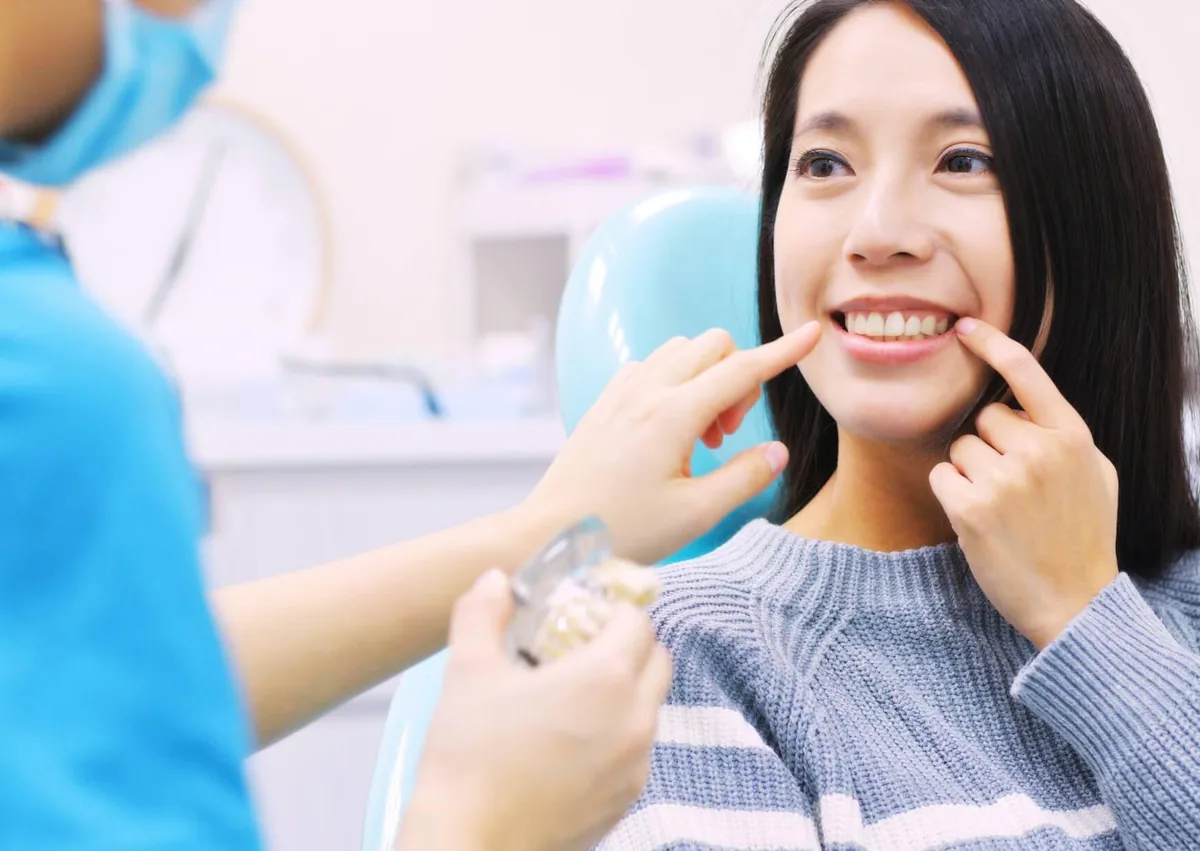
Dentures may be the better fit if you want a faster, less invasive, or more affordable solution. Implants may be the better fit if stability, chewing strength, and bone preservation matter most and you can safely undergo surgery and maintain the restoration.
A consultation usually includes an exam and dental imaging. For implants, three-dimensional imaging may be needed to measure bone and identify nerves, sinuses, and other structures that affect safe placement.
Seek prompt dental care if you have increasing swelling, fever, pus, uncontrolled bleeding, severe or worsening pain, a denture sore that does not heal, or an implant or replacement tooth that becomes loose. Facial swelling that affects breathing or swallowing needs emergency care.
A local restorative dentist can explain which options are realistic, how long treatment may take, what maintenance is required, and what the full cost is likely to be. Bringing your medication list, health history, insurance details, and questions about eating, appearance, and timing can make that visit more productive.
A focused consultation will clarify whether dentures or an implant-supported solution best meets your needs and outline expected appointments, costs, and maintenance. Call Carolina Complete for dentures in University City, Charlotte, NC at (704) 547-8555 to schedule a consultation or request next steps.
No. Implants often provide better stability, but surgery, healing time, anatomy, health risks, maintenance needs, and cost can make dentures the better choice for some people.
Sometimes. An existing denture can occasionally be adapted, but many cases require a new denture for proper fit, strength, bite, and implant positioning.
Possibly. Long-term tooth loss often reduces bone volume, but imaging can show whether implants are still feasible or whether grafting or another design should be considered.
The implant itself cannot get a cavity. However, plaque can inflame the surrounding gum and bone, and any remaining natural teeth can still decay.
Dentists often recommend removing dentures at night unless specific instructions say otherwise. This gives the tissues time to rest and allows the denture to be cleaned properly.