To remove plaque from teeth, brush twice a day with fluoride toothpaste, clean between your teeth once a day, and get a routine dental exam and cleaning as often as your dentist recommends. Soft plaque can be removed at home, but hardened plaque, called tartar or calculus, requires specialized dental instruments.
If hardened tartar or repeated plaque buildup is making cleaning difficult, a dental checkup can determine what needs professional removal and a personalized cleaning interval. Carolina Complete Dentistry in Charlotte, NC offers complete exams and cleanings with clear recommendations to help you keep plaque under control.
The most effective home routine is simple: brush thoroughly twice a day and clean between your teeth once a day. Plaque is soft and sticky, so it needs to be physically disrupted before it hardens.
Use a soft-bristled manual or electric toothbrush for two full minutes. Angle the bristles toward the gumline, use gentle pressure, and clean the front, back, and chewing surfaces of every tooth.
Brush with fluoride toothpaste and spit out the excess. Try not to rinse right away with a large amount of water, because that can wash away fluoride that helps protect enamel.
Clean between your teeth daily with floss, interdental brushes, or another tool recommended by a dental professional. Floss works best when it curves around each tooth in a C shape and slides gently just under the gumline.
A water flosser can be especially helpful if you have braces, bridges, implants, or limited hand dexterity. It can reduce plaque and gum inflammation, but the best device is the one that fits your mouth and that you will use consistently.
Plaque is a sticky film made of bacteria, saliva, and food particles. It starts forming again soon after you clean your teeth.
It tends to collect along the gumline, between teeth, around crowns or fillings, and in the grooves of back teeth. These areas are harder to reach and easier to miss during daily cleaning.
Plaque bacteria feed on sugars and other fermentable carbohydrates. As they do, they produce acids that can weaken enamel and raise the risk of cavities.
Plaque near the gums can also lead to gingivitis, which often causes redness, swelling, or bleeding. If plaque is not removed regularly, it can harden and become much harder to manage.
Crowded teeth, braces, dry mouth, and restorations with difficult-to-clean edges can all make plaque control harder. Frequent snacking and sipping sugary drinks also give plaque bacteria more chances to produce acid.
Plaque, tartar, and surface stains are different problems, so they do not respond to the same treatment. Knowing the difference helps you choose the right next step.
Plaque is usually colorless or pale and may make teeth feel fuzzy. Tartar is hardened plaque that often looks yellow or brown and feels rough.
Surface stains come from things like coffee, tea, red wine, or tobacco. They may change the color of teeth without creating the same rough buildup as tartar.
|
Buildup |
Typical Features |
Appropriate Removal |
|---|---|---|
|
Plaque |
Soft, sticky film |
Brushing and interdental cleaning |
|
Tartar |
Hard, rough deposit that does not brush off |
Professional scaling |
|
Surface stain |
Discoloration from coffee, tea, tobacco, or similar sources |
Professional polishing or whitening assessment |
Do not scrape your teeth with metal tools or home dental kits. They can injure the gums, scratch tooth surfaces, damage restorations, and still leave buildup below the gumline.
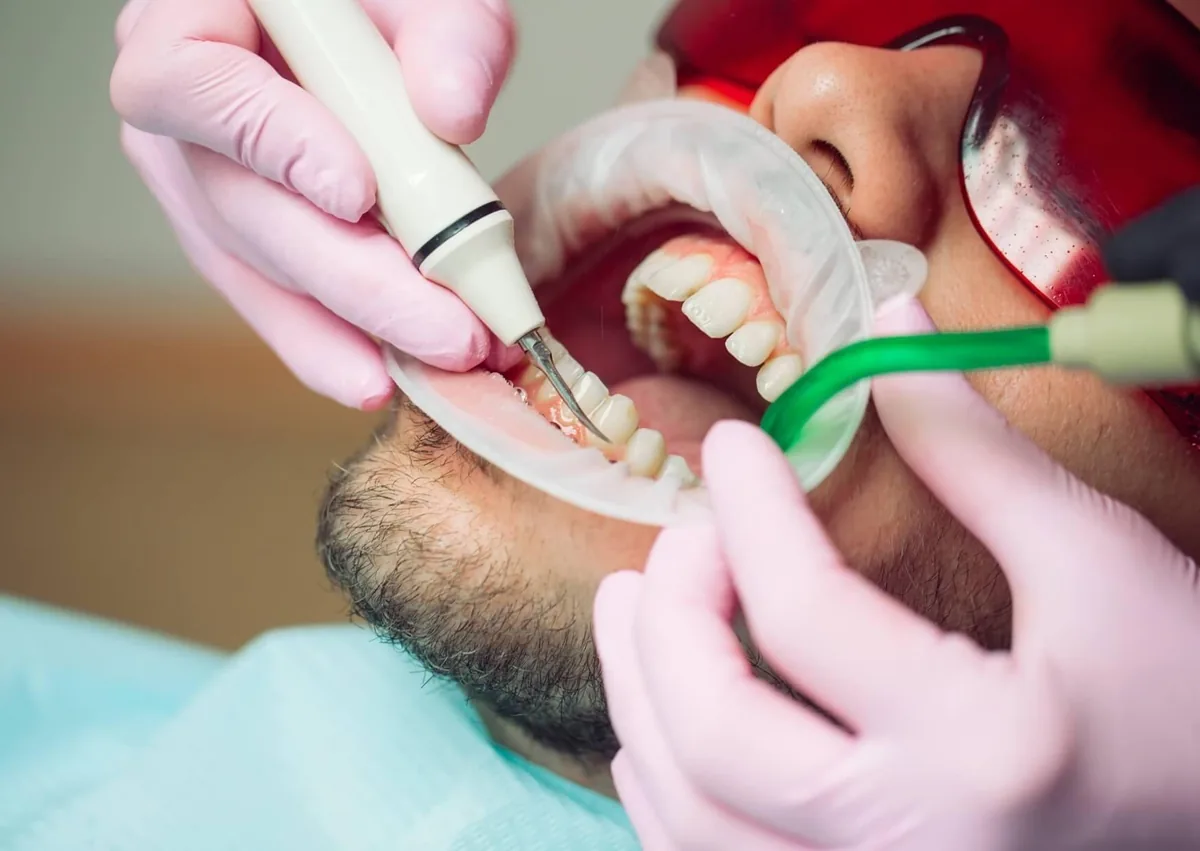
During a routine cleaning, a hygienist or dentist removes plaque and tartar with hand instruments and sometimes an ultrasonic scaler. They may also polish the teeth to remove some surface stains and smooth away soft residue.
If you have deeper gum pockets or bone loss, you may need scaling and root planing, often called a deep cleaning. This removes buildup below the gums and smooths root surfaces, but it should only be recommended after an exam and gum measurements.
A dental team that provides gum disease treatment can evaluate whether infection is limited to gingivitis or has progressed further. That distinction affects the type of cleaning and follow-up care you may need.
A routine cleaning does not fix cavities, replace lost enamel, or correct a loose or poorly fitting restoration. If plaque keeps returning in one area, your dentist may check for decay, dry mouth, crowding, or a filling or crown edge that traps buildup.
Plaque starts forming again within hours after brushing or a professional cleaning. That is why long-term control depends on steady daily care, not occasional aggressive brushing.
Once plaque hardens into tartar, it usually will not come off with better brushing alone. Professional cleaning results tend to last longer when you remove plaque daily, avoid tobacco, and keep sugary foods and drinks mainly to mealtimes.
Cleaning frequency is not the same for everyone. Your dentist can recommend a preventive dental care plan based on your cavity risk, gum health, tartar buildup, dry mouth, and any appliances or restorations you have.
Schedule a dental visit if you have bleeding gums, swelling, bad breath, gum tenderness, or visible hard deposits that do not improve with careful home care. These symptoms may point to gingivitis, tartar buildup, or a more advanced gum problem.
Seek prompt care for worsening tooth pain, facial swelling, pus, fever, a loose adult tooth, or trouble opening your mouth. Trouble breathing or swallowing with facial or neck swelling requires emergency care.
A general dentistry office can tell whether you are dealing with plaque, tartar, stain, decay, or gum disease. Professional guidance is especially helpful if buildup returns quickly or cleaning keeps causing pain or bleeding.
If plaque or tartar needs professional removal or a personalized recall schedule, the next step is a dental checkup to confirm what treatment and interval are right for you. Carolina Complete Dentistry offers focused dental checkups in Charlotte, NC; call (704) 547-8555 or schedule online to arrange an exam and cleaning.
Most soft plaque can be removed with one thorough brushing and interdental-cleaning session. Hardened tartar will not brush away and usually needs professional removal.
Mouthwash can help reduce bacteria or add fluoride, depending on the product. It does not replace brushing and cleaning between the teeth, because plaque still has to be physically disrupted.
Some fluoride toothpastes contain baking soda and are safe for regular use. Homemade abrasive mixtures are not recommended because they can irritate gums, wear tooth surfaces, and will not reliably remove tartar.
Gums often bleed when plaque has caused inflammation, especially if flossing or other interdental cleaning has been inconsistent. Use a gentle technique and arrange a dental evaluation if bleeding is heavy, gets worse, or lasts more than about one to two weeks.
Professional scaling by a trained dental professional is designed to remove deposits without harming healthy enamel. Teeth may feel temporarily sensitive afterward because tartar has been removed or root surfaces were previously covered and are now exposed.