
There is no reliable countdown for how long until a tooth infection kills you. Most tooth infections are treatable and do not become fatal, but an untreated infection can spread beyond the tooth within days or weeks and become life-threatening, so do not wait for severe symptoms before seeking emergency dentistry.
If you're worried a spreading tooth infection may become urgent, emergency dentistry can provide rapid evaluation and initial treatment to protect your airway and overall health. Carolina Complete Dentistry in Charlotte, NC can deliver focused, practical care to stabilize dangerous infections and guide next restorative steps.
A tooth infection usually starts when bacteria reach the soft tissue inside a tooth through decay, a crack, trauma, or advanced gum disease. Pus can collect around the root and form a dental abscess.
From there, the infection may stay localized for a time or spread into the jaw, face, neck, or bloodstream. That is why there is no exact timeline based on symptoms alone.
Gum disease can also play a role in oral infections. See understanding gum disease for more on causes and treatment.
Pain can lessen if the nerve dies or the abscess starts draining, but that does not mean the infection is gone. A tooth infection can still spread even if it hurts less.
Symptoms can change quickly as an infection worsens. This guide shows common patterns, but it cannot tell you exactly how severe your infection is.
|
Situation |
Possible Signs |
Appropriate Action |
|---|---|---|
|
Infection may be localized |
Persistent toothache, pain when biting, sensitivity, gum bump, bad taste, localized swelling |
Contact a dentist promptly, ideally the same day if pain or swelling is increasing |
|
Infection may be spreading |
Increasing facial or jaw swelling, fever, chills, swollen lymph nodes, worsening pain, difficulty opening the mouth |
Seek urgent dental or medical evaluation the same day |
|
Airway or systemic emergency |
Trouble breathing or swallowing, swelling beneath the tongue or into the neck, drooling, confusion, faintness, severe weakness, or rapidly expanding swelling |
Call 911 or go to the nearest emergency department now |
People with poorly controlled diabetes, cancer treatment, immune suppression, or other serious health conditions may face higher risk. In those cases, earlier evaluation is especially important.
A dangerous tooth infection does not usually come from the tooth itself alone. The serious risk happens when the infection spreads into deeper tissues, blocks the airway, or triggers a body-wide response.
Severe dental infections can lead to deep neck infection, airway obstruction, or sepsis. In rare but dangerous cases, swelling in the floor of the mouth can progress to Ludwig's angina.
Sepsis is the body's dangerous response to infection spreading through the system. A dental abscess leads to sepsis when bacteria and inflammation move beyond the tooth and start affecting the whole body.
Hospital care may be needed to protect breathing, control the spread, and stabilize the patient. Even then, the source of the infection still usually needs definitive dental treatment.
Treatment depends on whether the tooth can be saved, how far the infection has spread, and your overall health. A dentist may take X-rays, test the tooth, and examine the surrounding tissues before recommending care.
A root canal may save a restorable tooth by removing infected tissue, cleaning the canals, and sealing the inside of the tooth. The tooth is often protected afterward with a filling or crown.
If the tooth is badly cracked, too damaged, or not predictably restorable, a tooth extraction may be the safer choice. If pus is trapped, drainage may also be needed to reduce pressure and help control the infection.
|
Treatment |
When It May Be Considered |
Likely Next Step |
|---|---|---|
|
Root canal treatment |
The tooth can be saved and restored |
Permanent filling or crown, depending on the tooth |
|
Tooth extraction |
The tooth is not predictably restorable or saving it is not appropriate |
Discuss replacement choices after healing, when indicated |
|
Drainage |
A collection of pus requires release |
Definitive root canal treatment or extraction is still needed |
|
Hospital treatment |
The infection threatens the airway, is spreading deeply, or causes systemic illness |
Stabilization plus treatment of the dental source |
Antibiotics may help when the infection is spreading or when you have fever or other systemic symptoms. But they do not remove decay, clean infected root canals, or take out a badly damaged tooth, and guidance on antibiotic use in dentistry supports using them appropriately rather than as a substitute for treatment.
Pain and pressure may start improving once the source of the infection is treated. Swelling and tenderness often take longer to settle.
The exact recovery time depends on the severity of the infection, the treatment used, and your general health. If symptoms worsen after treatment, contact the treating dentist or medical team promptly.
Long-term success depends on finishing the full treatment plan. A tooth treated with root canal treatment may need a final restoration, while an extracted tooth may lead to a later discussion about replacement.
If you also notice bleeding gums, gum recession, or persistent bad breath, review the warning signs of gum disease to see whether a periodontal evaluation makes sense.
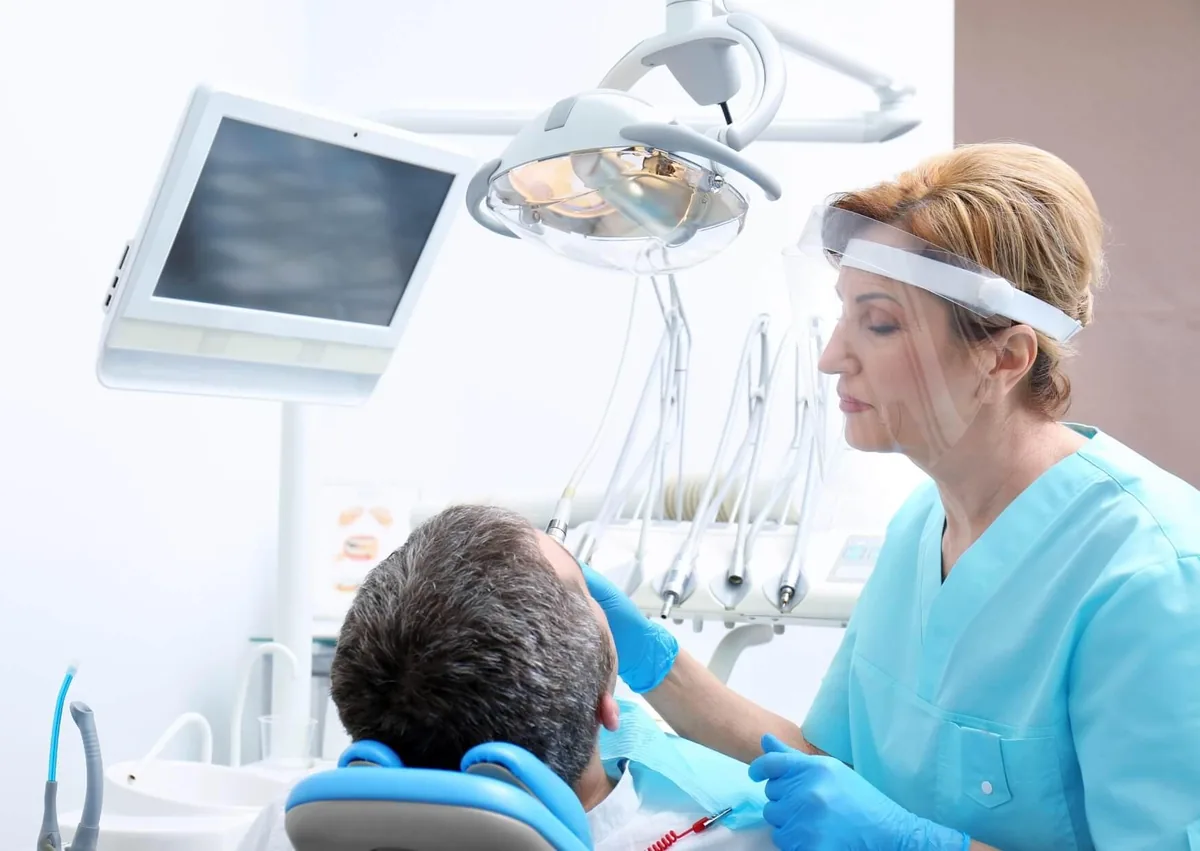
Do not place aspirin or chemicals on the gum. Do not try to drain the swelling yourself.
Home remedies may temporarily ease discomfort, but they do not cure the infection. Arrange prompt care with a local dentist or emergency dental provider, and use emergency medical services right away if breathing, swallowing, alertness, or rapidly increasing swelling is involved.
If you have worsening pain, increasing swelling, or any breathing or swallowing trouble, get evaluated by emergency dentistry now so the team can address airway risks and begin source control. Carolina Complete Dentistry focuses on emergency dentistry in Charlotte, NC; call (704) 547-8555 to speak with the team or to arrange prompt evaluation.
A fatal outcome overnight is uncommon, but a rapidly spreading infection can become an emergency without much warning. Trouble breathing or swallowing, neck swelling, confusion, or rapidly worsening facial swelling requires immediate emergency care.
It can destroy tissue around the tooth, damage supporting bone, and spread into the face, jaw, neck, or bloodstream. Even if the pain stops, the infection may still be active.
Symptoms may temporarily improve if pressure is released or the nerve dies, but the source usually remains. Definitive dental treatment is generally needed to clean and restore the tooth or remove it.
A dentist is usually the right first contact for tooth pain, a gum bump, or localized swelling without emergency signs. Go to an emergency department or call 911 for breathing or swallowing difficulty, swelling under the tongue or into the neck, confusion, faintness, severe weakness, or rapidly expanding swelling.