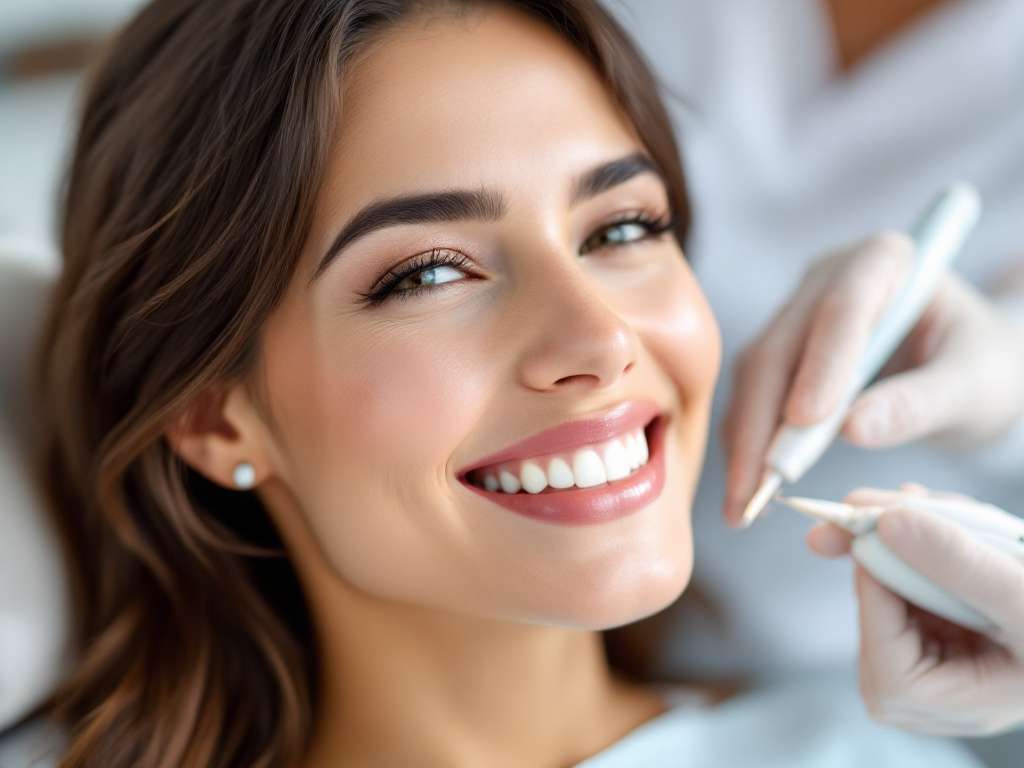
If you’re looking to enhance your smile, in-office whitening dental provides a fast, professional way to lift stains and brighten your teeth. In-office whitening dental, sometimes called chairside bleaching, uses a high-concentration peroxide gel applied under controlled conditions, so you can achieve up to eight shades lighter in a single visit. With advanced technologies such as lasers and LED lights, you’ll see immediate results and enjoy longer-lasting whiteness compared to most at-home kits. This treatment typically takes about one hour, making it convenient for busy schedules. In this article, you’ll learn how in-office whitening works, how it compares to other options, what benefits you can expect, and how to maintain your newly brightened smile.
Understand in-office bleaching
What is in-office whitening dental?
In-office whitening dental is a professional procedure performed by trained dental staff. Also known as chairside bleaching, it uses stronger bleaching agents—usually hydrogen peroxide or carbamide peroxide—in concentrations between 25% and 43%. Because the process is supervised, your dentist can adjust the treatment to your needs and protect your gums and enamel throughout [1].
How it works
Professional in-office whitening follows a structured process:
Pre-treatment process
Your dentist first cleans your teeth to remove plaque. A cheek retractor holds lips and cheeks away. Gum tissue is shielded by a liquid rubber dam or a hardening resin barrier to prevent irritation [1].
Application of bleaching gel
A high-concentration hydrogen peroxide gel is applied to your teeth in 15- to 30-minute intervals. The gel breaks down stains on the enamel, lifting discoloration quickly and evenly [1].
Use of light or laser
Some practices use LED lights or lasers to activate and accelerate the bleaching agents. Technologies like Zoom or blue laser systems allow you to complete treatment in under 90 minutes with more dramatic results [2].
Types of stains treated
- Extrinsic stains occur on the enamel surface from tea, coffee, tobacco, and sauces. These respond well to in-office bleaching [3].
- Age-related discoloration happens when enamel thins and darker dentin shows through. Professional bleaching can lighten dentin-based stains but sometimes needs to be paired with veneers or bonding.
- Intrinsic stains, such as those from demineralization or fluorosis, are less responsive and may require cosmetic restorations.
Compare whitening methods
In-office vs at-home kits
At-home dentist-dispensed kits use lower-strength gels (3%–20% peroxide) and custom trays. They may take 1–2 weeks of daily wear to show results. In-office whitening delivers 25%–43% peroxide in a single session, lightening teeth by 5–8 shades in about 60–90 minutes [4].
Professional vs over-the-counter
Over-the-counter whiteners offer convenience and cost savings ($20–$100), but their lower peroxide levels yield minimal change, often 1–3 shades over several weeks. Professional treatments ($300–$1,000) provide stronger gels, clinical oversight, and protective barriers for gums, reducing risks and delivering consistent, uniform results [5].
Technology and tools
- Zoom! whitening combines hydrogen peroxide gel with UV light for up to 15 shades improvement in 15-minute cycles [6].
- Laser systems use a prescription-strength gel plus a focused blue laser, with costs averaging $792 nationally [6].
- LED lights offer a gentler activation and are common in many in-office protocols.
Evaluate treatment benefits
Immediate shade improvement
You’ll notice a visibly brighter smile right away—typically 2–8 shades lighter by the end of your appointment. Some whitening effect stems from temporary tooth dehydration, with final color stabilizing after a few days [1].
Longevity of results
Professional bleaching lasts roughly 6–18 months, depending on your diet, oral hygiene, and habits like smoking. Annual touch-ups help maintain optimal whiteness [7].
Enhanced safety and comfort
Controlled application under dental supervision reduces risks of gum irritation and enamel damage. Your dentist uses barriers—rubber dams or protective gels—to shield soft tissue and can pause or adjust treatment if you feel discomfort [5].
Addressing sensitivity
To minimize postoperative sensitivity, your dentist may apply desensitizing agents before or after bleaching and tailor gel concentration and session length to your tolerance [8]. Most sensitivity resolves within two to three days.
Review procedure steps
Consultation and evaluation
Before whitening, you’ll have a cosmetic dental evaluation to confirm healthy teeth and gums. Any decay or gum disease is treated first to avoid complications [5].
Protecting gums and soft tissue
Your provider fits a cheek retractor and places a thin rubber sheet or protective gel over gum tissue. This barrier prevents high-concentration peroxide from irritating soft tissues [5].
Gel application intervals
The whitening gel is applied in two to four intervals of 15–30 minutes. Between applications, excess gel is removed and fresh product added to maintain optimal activity [9].
Post-treatment care
After your session, avoid dark-colored beverages and foods—coffee, tea, red wine, berries, tomato sauce—and highly acidic items for at least 48 hours to preserve whitening results [10]. Using a sensitivity toothpaste can ease any mild discomfort.
Manage costs and insurance
Typical price range
| Treatment | Cost range |
|---|---|
| In-office whitening | $300–$1,000 [11] |
| Zoom! whitening | Around $500 [11] |
| Laser whitening | $400–$1,500 [6] |
| Dentist-dispensed at-home kit | $100–$400 [5] |
| Over-the-counter products | $20–$100 [5] |
Factors affecting cost
- Gel concentration and number of sessions
- Technology used (laser, UV, LED)
- Dentist’s experience and geographic location
- Pre-treatment procedures, such as cleanings or restorations [11]
Insurance considerations
Cosmetic whitening is generally considered elective, so routine insurance coverage is unlikely. To offset costs, ask about practice financing or combine services in a whitening & veneers package or explore cosmetic dentistry with insurance options.
Maintain whitening results
Daily oral habits
- Brush twice daily with a whitening toothpaste
- Floss daily to prevent stain-causing plaque buildup
- Rinse or brush soon after consuming staining foods or drinks [8]
Avoid stain-causing foods
For the first 48 hours especially, steer clear of coffee, tea, red wine, berries, tomato sauce, and tobacco to lock in results [10].
Professional touch-ups
Annual or biannual in-office touch-ups help you maintain your brightest shade. Your dentist may also provide a take-home tray regimen for occasional at-home maintenance [12].
Consider additional enhancements
Combining with veneers
After whitening, you can match porcelain veneer placement to your new shade for a seamless result. A veneers to improve smile approach ensures uniform color and shape.
Bonding options
If you have minor chips or gaps, a dental bonding service or bonding for chipped teeth can refine tooth shape before or after whitening.
Gum contouring
A gum contouring service or gum aesthetics dentistry creates balanced proportions, highlighting your brightened teeth.
Smile design consultation
Discuss a smile design consultation or digital smile design to combine whitening with a custom smile makeover or cosmetic smile makeover. You can explore esthetic dental treatment, cosmetic dental crowns, and cosmetic dental imaging to complete your transformation.
Plan your next steps
Schedule your evaluation
Book a cosmetic dental evaluation to confirm you’re a good candidate and discuss your goals.
Discuss custom treatments
Explore combining whitening with veneers, bonding, or contouring in a whitening & veneers package designed for your needs.
Maintain your smile
Stay on track with regular cleanings, in-office touch-ups, and daily care to keep your smile bright and confident.
By choosing professional in-office whitening dental, you invest in a safe, efficient, and effective way to enhance your smile’s appearance and boost your confidence. Talk to your dental provider today to discover how this treatment can work for you.
References
- (Smiles Dental)
- (CareCredit; Dental Associates)
- (Coulon Watts)
- (Your Dentistry Guide; Gentle Dental)
- (Your Dentistry Guide)
- (CareCredit)
- (Danbury Smiles; CareCredit; Gentle Dental)
- (Danbury Smiles)
- (Smiles Dental; Coulon Watts)
- (Bunker Hill Dentistry)
- (Gentle Dental)
- (Bakersfield Dentistry; CareCredit)